地壳
How to Say
👀 0
How to Write
Meaning: Earth's crust
How to Understand
地壳
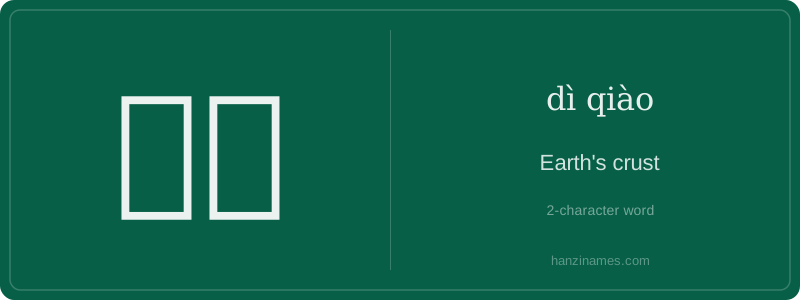
地壳 (dì qiào) refers to the outermost layer of the Earth, commonly known as the Earth's crust in English. It is the solid surface that forms the planet's exterior and is distinct from the mantle and core beneath it.
The character 地 (dì) means 'earth' or 'land,' while 壳 (qiào) translates to 'shell' or 'crust.' Together, they literally mean 'earth's shell,' emphasizing the protective and outermost nature of this geological layer.
地壳 is widely used in geology and earth science contexts. Understanding it is essential for studying tectonic plates, earthquakes, and volcanic activity. In everyday language, it may appear in educational materials or scientific discussions about the Earth's structure.
Example Sentences
科学家研究地壳运动,以预测地震的发生。
Scientists study crustal movements to predict earthquake occurrences.
地壳的成分主要由硅和铝组成。
The composition of the Earth's crust is mainly silicon and aluminum.