驸马
How to Understand
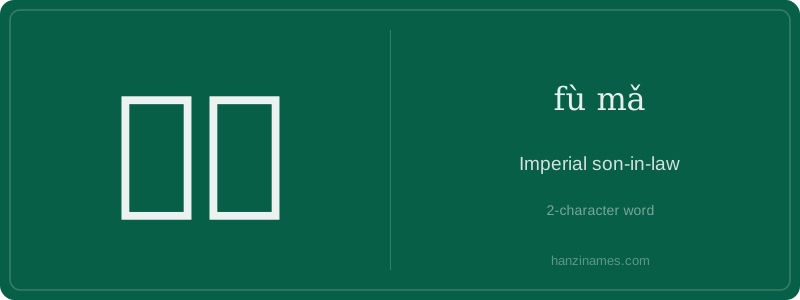
驸马 (fù mǎ) is a historical title used in ancient China to refer to the husband of a princess or imperial daughter. It was not simply a marital title but also carried political and social significance, as these men were often selected from noble families to strengthen alliances within the imperial court.
The character 驸 (fù) originally meant 'a horse that pulls a carriage,' symbolizing service or support, while 马 (mǎ) means 'horse.' Together, the term likely evolved from the idea of a man who served the imperial family, much like a horse serves its master.
In modern times, the term is rarely used outside of historical contexts or in literature and media depicting ancient China. It is often associated with stories of imperial marriages, power struggles, and court intrigue. Understanding this term can help learners appreciate the complexity of traditional Chinese titles and their cultural meanings.