掠夺
How to Understand
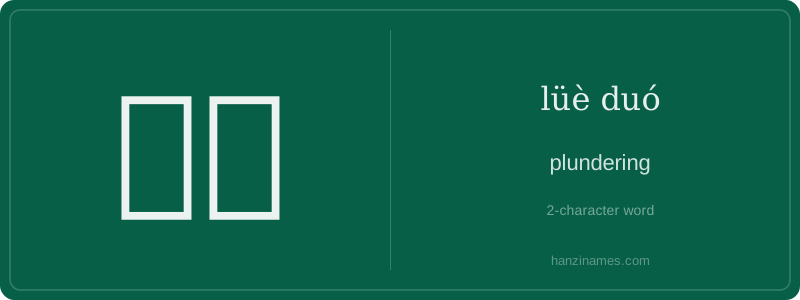
掠夺 refers to the act of taking something by force or without permission, often involving violence or coercion. It is commonly used to describe the seizure of property, resources, or even people, typically in a historical or military context. Unlike simple theft, 掠夺 implies a more aggressive and systematic form of taking.
The character 掠 (lüè) originally meant to seize or capture, while 夺 (duó) means to take away or snatch. Together, they form a compound that emphasizes the violent or forced nature of the action. This combination reflects a deep-rooted cultural understanding of conflict and possession in Chinese history.
掠夺 is often used in discussions about war, colonialism, or historical conflicts. It appears in literature, news reports, and academic texts. Learners should note that it carries strong negative connotations and is rarely used in casual conversation. Understanding this term can help grasp complex historical narratives in Chinese contexts.