且说
How to Understand
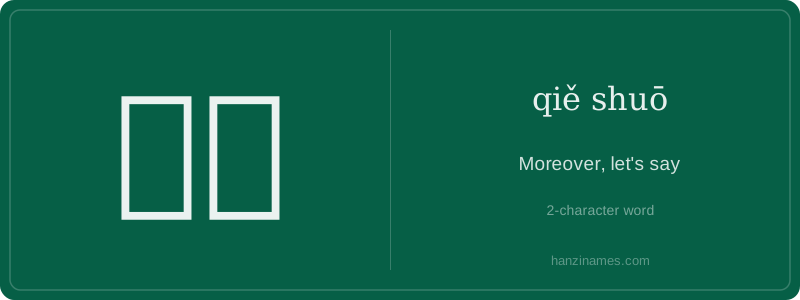
"且说" is a classical Chinese conjunction used to introduce a new topic or shift the narrative in storytelling. It often translates to "moreover," "let's say," or "as for." Unlike modern Chinese conjunctions like "而且" (and), "且说" has a more literary and formal tone, commonly found in historical novels and traditional narratives.
The character "且" (qiě) originally meant "and" or "also," while "说" (shuō) means "to speak" or "to say." Together, they form a phrase that signals a transition in storytelling, inviting the listener or reader to focus on a new development or character.
In modern usage, "且说" is mostly seen in written literature rather than spoken language. It adds a sense of continuity and drama, often used to bridge between different parts of a story. Learners should note its formal nature and avoid using it in casual conversation unless in a literary context.