无效
How to Understand
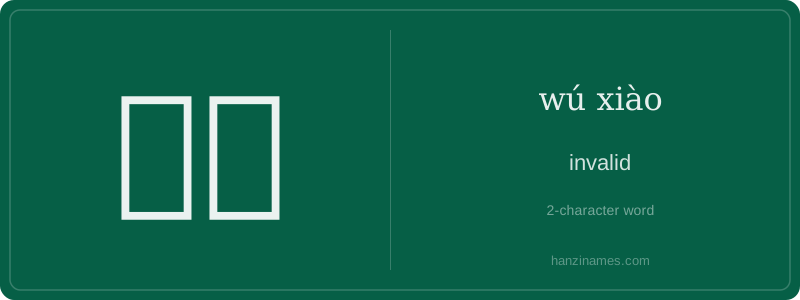
无效 means 'invalid' or 'not effective,' often used to describe something that lacks legal, practical, or functional value. It differs from similar terms like 'useless' or 'unrealized' by emphasizing the lack of validity or effectiveness in a specific context.
The character 无 (wú) means 'without' or 'not,' and 效 (xiào) means 'effect' or 'result.' Together, they convey the idea of 'without effect' or 'without result,' indicating something that fails to produce the intended outcome or lacks legal standing.
无效 is commonly used in legal, administrative, or formal contexts, such as declaring a contract invalid or stating that a document has no legal force. It is also used informally to describe situations where something doesn't work as expected, such as a failed plan or an ineffective solution.