仲裁
How to Understand
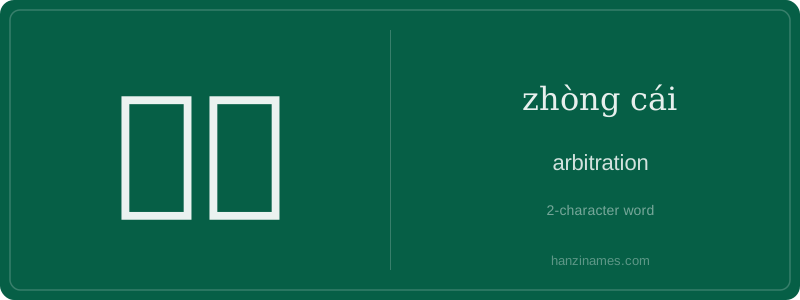
仲裁 refers to the process of resolving disputes through a neutral third party, typically used in legal or business contexts. Unlike mediation, which is more informal, arbitration involves a binding decision made by an arbitrator.
The character 仲 (zhòng) originally meant 'middle' or 'intermediate,' suggesting fairness and balance. 裁 (cái) means 'to cut' or 'to decide,' often used in the context of making judgments. Together, they convey the idea of a fair and decisive resolution of conflicts.
仲裁 is commonly used in contracts, international trade, and labor disputes. It is seen as a faster and more confidential alternative to court proceedings. In Chinese culture, maintaining harmony and avoiding public conflict is valued, making arbitration a preferred method for resolving disagreements discreetly.