仲
Character Story & Explanation
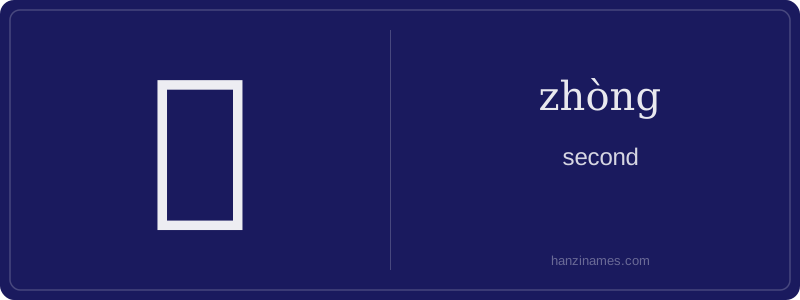
In daily life, 仲 appears most commonly in seasonal compound terms like 仲夏 (zhòngxià, mid-summer) or 仲秋 (zhòngqiū, mid-autumn)—still used in weather reports, cultural programming, and lunar calendar apps across China. It’s also embedded in the idiom 伯仲之间 (bó zhòng zhī jiān), meaning 'neck and neck' or 'hard to distinguish', referencing the closeness of first (伯) and second (仲) brothers in rank. Historically, 仲 appears in the *Zuo Zhuan* (4th c. BCE) and *Analects*, often denoting birth order or temporal sequence.
The character is not pictographic; it’s a phono-semantic compound: 亻 (person radical, semantic) + 中 (zhōng, 'middle', both phonetic and semantic). The seal script form already showed this structure by the Warring States period—no oracle bone evidence exists, and scholars agree its origin lies in Zhou-era linguistic standardization of ordinal terms for seasons and siblings.
仲 (zhòng) is a quiet but deeply rooted character in Chinese timekeeping and social hierarchy. Its core meaning—'second of three'—originates from ancient seasonal divisions: each season was split into early (孟), middle (仲), and late (季) months. So 仲春 means 'mid-spring', specifically the second month of spring (roughly April in the lunar calendar). This reflects how traditional Chinese culture structured time not just chronologically, but relationally—emphasizing position and balance.
The character’s form reinforces this idea: the radical 亻 (person) signals human-centered meaning, while the right side 中 (zhōng, 'middle') visually anchors it in centrality. Though 仲 looks simple—just six strokes—it carries layered significance: not merely 'middle' as spatial location, but 'second-in-sequence' in ranked triads, especially in kinship (e.g., 仲兄 = second elder brother) and seasonal naming.
Unlike standalone words, 仲 rarely appears alone in modern speech—it thrives in compound terms tied to tradition, literature, or formal contexts. You’ll encounter it in classical poetry, agricultural almanacs, festival names (e.g., 仲秋节, an old name for Mid-Autumn Festival), and even surnames (e.g., Zhong Kui, the mythic door god). Its persistence shows how Chinese language preserves cosmological order within everyday script.
Example Sentences
Common Compounds
Similar Characters — Don't Mix These Up
Your First Step into Chinese Culture: Get a Chinese Name
Every journey into Chinese begins with a name. Use our free Chinese name generator to create a meaningful, personalized Chinese name that fits you perfectly.
Get My Chinese Name →