不是
How to Understand
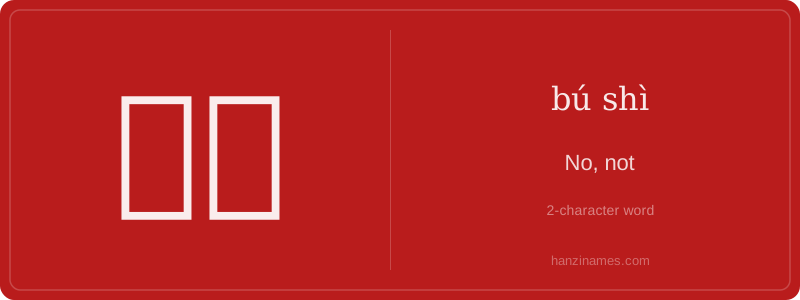
不是 is the most common Chinese expression for 'no' or 'not' in English. It is used to negate statements, often in response to questions or to correct assumptions. Unlike some other negations in Chinese, 不是 is typically used with a subject and verb, making it more explicit than other forms of negation.
The character 不 (bù) means 'not' or 'no,' and 是 (shì) means 'to be' or 'is.' Together, 不是 literally translates to 'not is,' which functions as a negation in sentences. This structure is similar to the English construction 'is not,' but it is more commonly used in conversational contexts rather than formal writing.
不是 is widely used in daily conversations, especially when denying something or correcting a misconception. It is also often paired with 是 (shì) in questions like “是…吗?” (Is it…?), where 不是 would be the response. Understanding 不是 is essential for basic communication in Mandarin and helps learners grasp the nuances of negation in the language.