人口
How to Understand
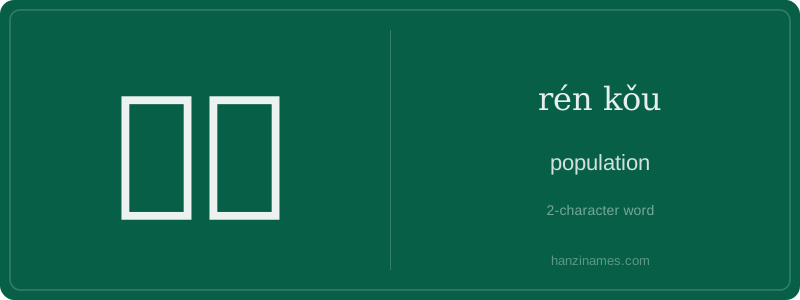
人口 (rén kǒu) refers to the total number of people living in a particular area, country, or region. It is commonly used to describe demographic data and is distinct from terms like 'people' or 'residents,' which can be more general.
The character 人 (rén) means 'person' or 'people,' while 口 (kǒu) originally meant 'mouth' but also came to signify 'a person' or 'individual' in certain contexts. Together, 人口 literally means 'people's mouths,' symbolizing the collective presence of individuals in a population.
人口 is frequently used in discussions about demographics, government planning, resource allocation, and social policies. In China, for example, population control has been a significant topic, especially with policies like the One-Child Policy. Understanding 人口 helps learners grasp how Chinese society discusses human resources and growth.