目前
How to Understand
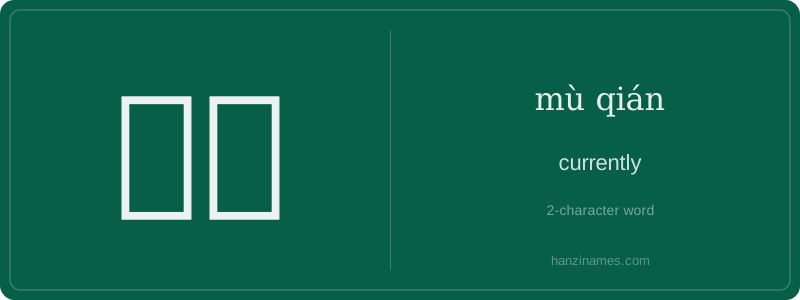
目前 (mù qián) is an adverb meaning 'currently' or 'at the present time.' It refers to the present moment, often used to describe the current state of a situation or condition.
The character 目 (mù) originally meant 'eye' or 'vision,' while 前 (qián) means 'front' or 'before.' Together, they form a term that literally translates to 'in front of the eye,' which metaphorically means 'now' or 'at this moment.' This reflects how the concept of the present is visualized as something directly before us.
目前 is commonly used in both formal and informal contexts to indicate the current status of something. For example, it can be used in business, news, or daily conversations to emphasize that a situation is ongoing or has not changed yet. It is also often paired with phrases like “目前来看” (mù qián lái kàn), meaning 'from the current perspective,' or “目前还没有” (mù qián hái méi yǒu), meaning 'has not yet.'