可是
How to Say
👀 0
How to Write
Meaning: but
How to Understand
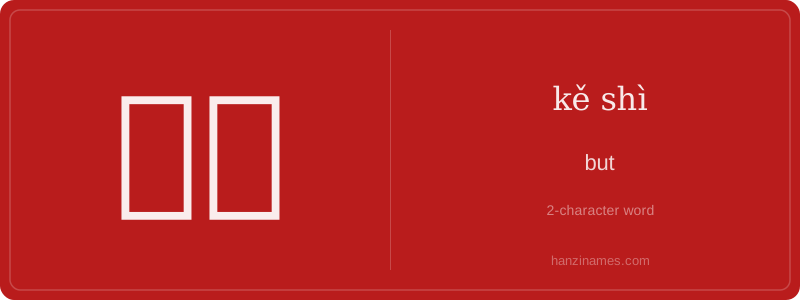
可是
可是 is a conjunction used to introduce a contrast or exception, similar to 'but' in English. It is commonly used to show a shift in thought or to present an opposing idea.
The character 可 (kě) originally meant 'can' or 'possible,' while 是 (shì) means 'is' or 'to be.' Together, they form a phrase that emphasizes contrast, literally meaning 'but it is.'
可是 is widely used in spoken and written Chinese to express disagreement, surprise, or to highlight a difference. It is often placed at the beginning of a sentence to introduce a contrasting point, making it essential for natural conversation and writing.
Example Sentences
他很努力,可是没有成功。
He worked hard, but he didn't succeed.
这个电影很好看,可是太长了。
This movie is very good, but it's too long.