执行
How to Understand
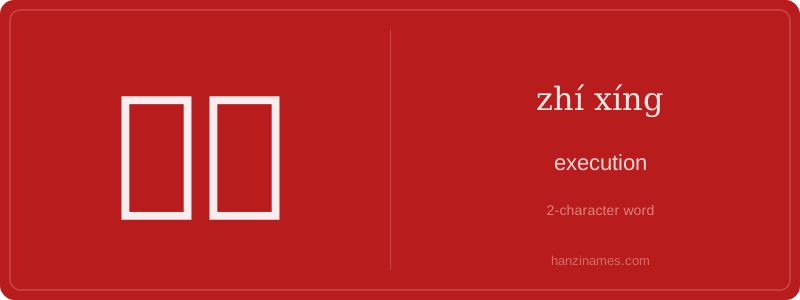
执行 means 'execution' or 'implementation,' typically referring to the act of carrying out a plan, order, or law. It emphasizes the process of turning something theoretical into reality, often in formal or structured contexts.
The character 执 (zhí) originally meant 'to hold' or 'to grasp,' and 行 (xíng) means 'to go' or 'to act.' Together, they form a concept that implies actively carrying out a task or decision, rather than just thinking about it.
执行 is commonly used in legal, business, and administrative settings. For example, a court might issue a ruling, and the execution of that ruling refers to its enforcement. In daily life, people might talk about the execution of a project or plan, highlighting the importance of following through on commitments.