结果
How to Understand
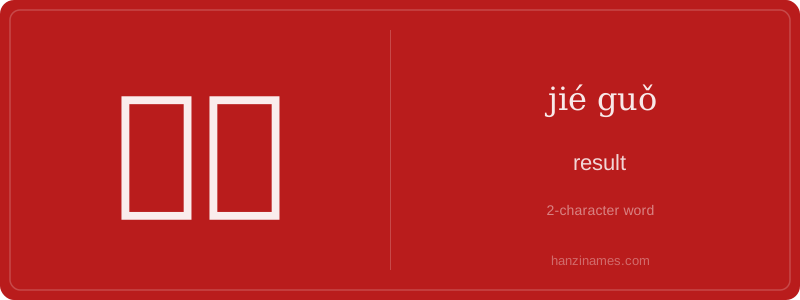
结果 (jié guǒ) is a noun meaning 'result' or 'outcome.' It refers to the consequence or final outcome of an action, event, or process. Unlike similar terms like 'effect,' which can be more abstract, 结果 often implies a tangible or concrete outcome.
The character 结 (jié) originally meant 'to tie' or 'to bind,' and later came to mean 'end' or 'result.' 果 (guǒ) means 'fruit' but is also used metaphorically to represent 'result' or 'outcome.' Together, they form a term that literally suggests the 'fruit' of an action, symbolizing the outcome of effort or activity.
结果 is commonly used in both formal and informal contexts, such as in academic settings, business discussions, or daily conversations. It can also appear in idiomatic expressions like 结果不错 (jié guǒ bù cuò), meaning 'the result is good.' Understanding this word helps learners grasp how outcomes are discussed in Chinese culture, where results often carry significant weight in decision-making and evaluation.