其实
How to Understand
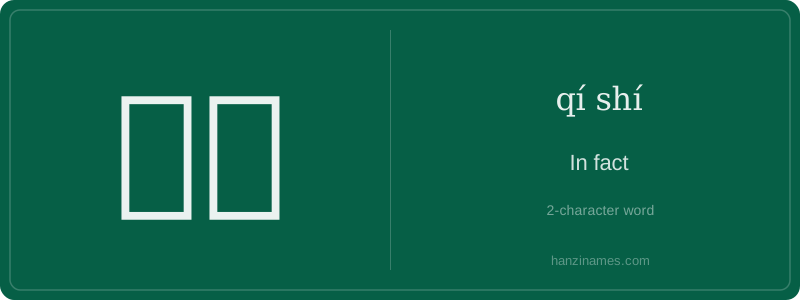
其实 (qí shí) is an adverb meaning 'in fact' or 'actually.' It is used to introduce a statement that contrasts with what was previously said or expected, often revealing a surprising or hidden truth.
The character 其 (qí) originally meant 'among them' or 'their,' but in this context, it functions as a pronoun or particle. 实 (shí) means 'real' or 'actual.' Together, they form a phrase that emphasizes the actuality of something, often after a contrast or clarification.
其实 is commonly used in everyday conversations to correct misunderstandings, reveal hidden information, or emphasize a point. It can also add a sense of surprise or revelation. For example, when someone says something that seems incorrect, you might respond with 其实 to provide the real situation.