时代
How to Understand
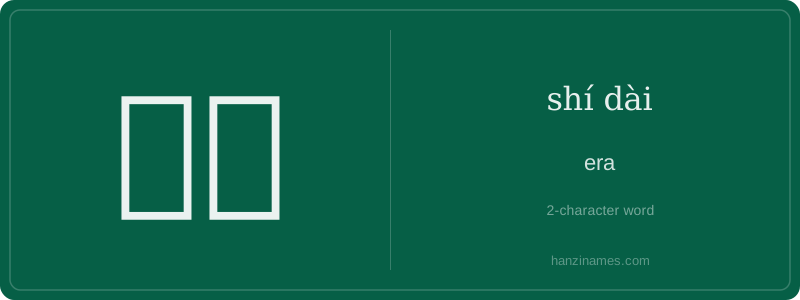
时代 (shí dài) translates to 'era' in English, referring to a distinct period in history marked by particular characteristics or events. It is often used to describe the time of a specific development, innovation, or cultural shift.
The character 时 (shí) means 'time' or 'moment,' while 代 (dài) refers to 'generation' or 'age.' Together, they form a term that emphasizes the historical and cultural context of a particular time period.
时代 is commonly used in both historical and modern contexts, such as discussing the 'digital era' or the 'modern age.' It can also be used metaphorically, like in phrases such as 现代时代 (xiàndài shídài), meaning 'modern era.' Understanding 时代 helps learners grasp how Chinese speakers refer to different phases of history and progress.