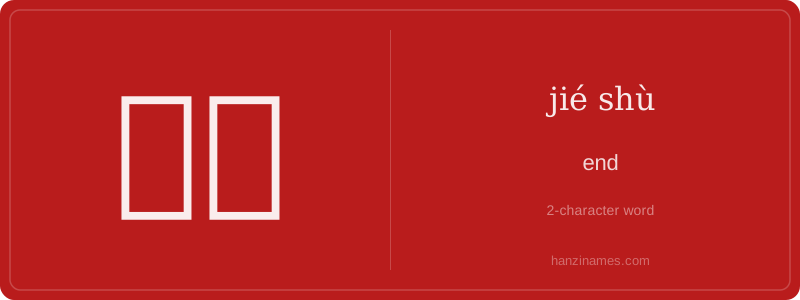
结束
How to Say
👀 0
How to Write
Meaning: end
How to Understand
结束
结束 means 'end' or 'conclusion' in English. It refers to the point at which something stops or comes to a close, often implying completion or termination.
The character 结 (jié) originally meant 'to tie' or 'to bind,' while 束 (shù) meant 'to bind' or 'to restrict.' Together, they form a word that literally means 'to tie together' and came to symbolize the idea of closing or finishing something.
结束 is commonly used in both formal and informal contexts. It appears in phrases like 会议结束 (huìyì jiéshù), meaning 'meeting ends,' or 比赛结束 (bǐsài jiéshù), meaning 'game ends.' It can also be used metaphorically, such as in 生活的结束 (shēnghuó de jiéshù), which means 'the end of life.'
Example Sentences
会议结束了,大家开始离开会场。
The meeting ended, and everyone began to leave the meeting room.
比赛结束时,观众们鼓掌欢呼。
At the end of the game, the audience clapped and cheered.