行为
How to Understand
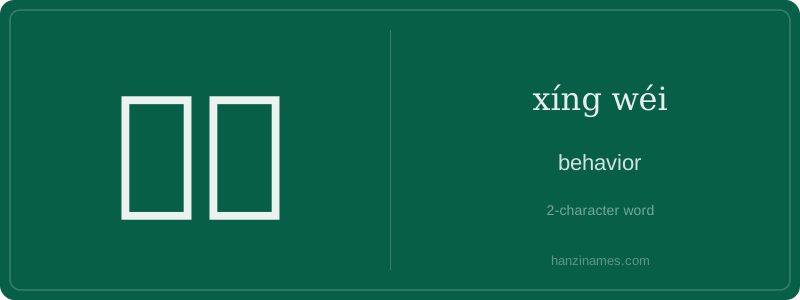
行为 (xíng wéi) means 'behavior' or 'action' in English. It refers to the way a person acts or behaves, especially in social or moral contexts. Unlike the more general term 'action,' 行为 often implies intentional or observable conduct that reflects a person's character or values.
The character 行 (xíng) originally meant 'to go' or 'to act,' and later came to mean 'behavior' or 'conduct.' The character 为 (wéi) is often used to indicate 'to be' or 'to do.' Together, they form a compound meaning 'to behave' or 'behavior.'
行为 is commonly used in formal and academic contexts, such as psychology, sociology, and ethics. In daily life, it can describe someone's actions in various situations, such as at work, in school, or in relationships. Understanding 行为 helps learners grasp how Chinese culture emphasizes proper conduct and social responsibility.