长期
How to Understand
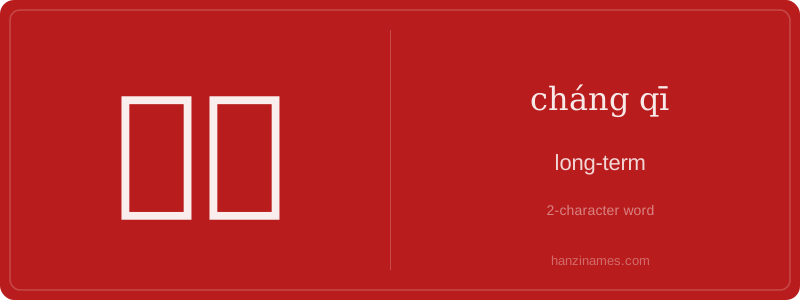
长期 (cháng qī) is commonly translated as 'long-term' or 'long period.' It refers to something that lasts for a long time, often implying continuity and sustained effort or duration. Unlike 'short-term,' which suggests something temporary, 长期 emphasizes endurance and lasting impact.
The character 长 (cháng) means 'long' or 'extended,' while 期 (qī) means 'period' or 'term.' Together, they form a compound that conveys the idea of a prolonged or extended duration. This combination reflects a cultural emphasis on patience and long-range planning in Chinese society.
长期 is frequently used in contexts such as business, relationships, and personal goals. For example, a 长期 plan (cháng qī jì huà) is a long-term plan. It also appears in phrases like 长期投资 (cháng qī tóu zī), meaning 'long-term investment.' Understanding 长期 helps learners grasp how Chinese culture values sustainability and future-oriented thinking.