综合
How to Understand
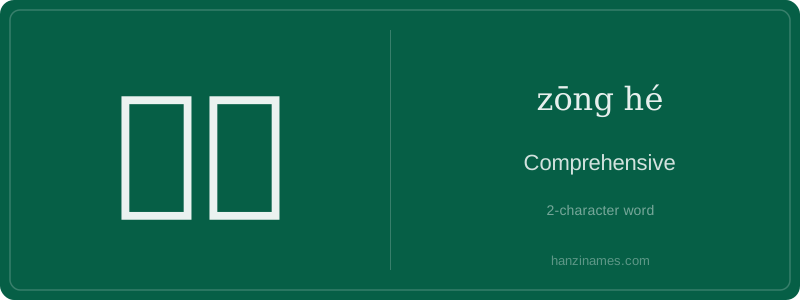
综合 refers to the act or result of combining multiple elements into a unified whole. It emphasizes integration, synthesis, and the ability to consider various aspects together. Unlike simple 'combination,' 综合 often implies a more thoughtful and structured unification of different parts.
The character 综 (zōng) originally meant 'to weave' or 'to entwine,' suggesting the idea of intertwining different elements. 合 (hé) means 'to join' or 'to unite.' Together, they form a term that reflects the merging of distinct components into a cohesive whole.
综合 is commonly used in academic, business, and policy contexts to describe comprehensive approaches, analyses, or plans. It can also refer to a composite or integrated system. In daily conversation, it might appear in phrases like 综合评价 (comprehensive evaluation) or 综合性问题 (comprehensive issue).