离开
How to Understand
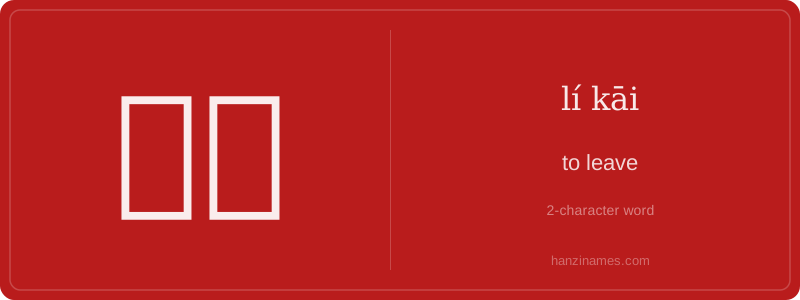
离开 means 'to leave' or 'to depart,' typically referring to the action of moving away from a place, person, or situation. It is often used in the context of physical movement but can also be metaphorical, such as leaving a job or relationship.
The character 离 (lí) originally meant 'to separate' or 'to be apart,' and 开 (kāi) means 'to open' or 'to start.' Together, they form a compound meaning 'to depart' or 'to go away,' reflecting the idea of separating from a current state or location.
离开 is commonly used in daily conversations when talking about leaving a place, a job, or even a relationship. It is neutral in tone and widely understood across Mandarin-speaking regions. In formal contexts, it may be used in phrases like 离开公司 (to leave a company) or 离开家乡 (to leave one's hometown).