各地
How to Understand
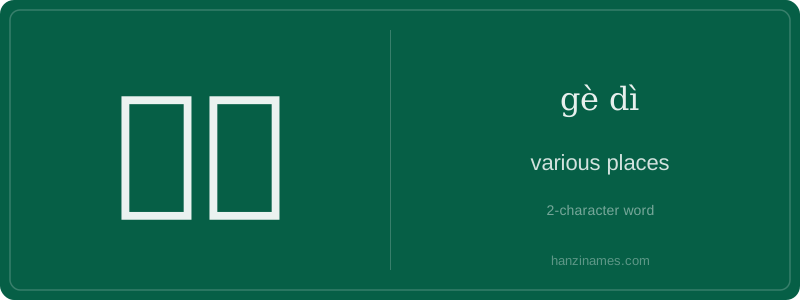
各地 means 'various places' or 'different regions'. It refers to multiple locations, often in the context of widespread occurrence or distribution. Unlike words like 'everywhere', 各地 emphasizes specific, distinct areas rather than a general sense of ubiquity.
The character 各 (gè) means 'each' or 'every', and 地 (dì) means 'place' or 'region'. Together, they form a compound meaning 'each place' or 'different regions', emphasizing diversity and variety in location.
各地 is commonly used in contexts such as cultural practices, weather conditions, or events that vary by region. For example, it might describe how traditions differ across the country or how certain foods are popular in specific areas. Understanding 各地 helps learners grasp the idea of regional differences in Chinese contexts.