财产
How to Understand
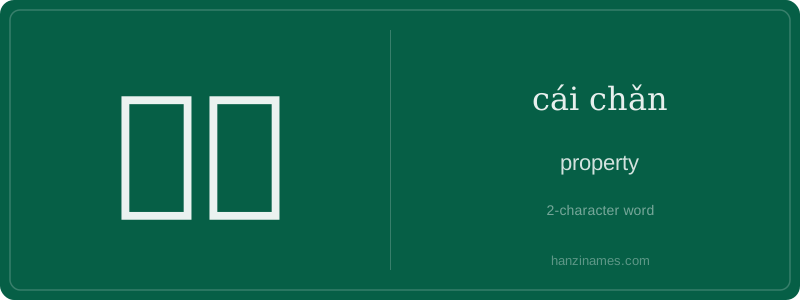
财产 (cái chǎn) refers to property or assets, typically in the context of tangible possessions such as real estate, money, or personal belongings. It differs from concepts like 'wealth' or 'fortune' by focusing more on physical or legal ownership rather than abstract value.
The character 财 (cái) originally meant 'wealth' or 'money,' and 产 (chǎn) means 'production' or 'offspring.' Together, they imply something that is produced or owned, often in a material sense. This combination reflects the traditional Chinese view of property as something accumulated through labor or inheritance.
财产 is commonly used in legal, financial, and everyday contexts, especially when discussing inheritance, ownership, or asset distribution. Understanding this term is essential for discussions about family matters, real estate, or business dealings in Chinese-speaking regions.