外国
How to Understand
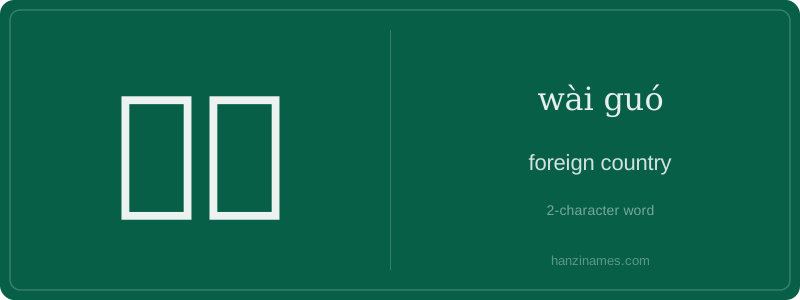
外国 (wài guó) means 'foreign country' or 'another country.' It refers to a nation that is not one's own, often used in contrast to the speaker's homeland. Unlike words like 'abroad,' which can imply travel or residence, 外国 is more neutral and simply denotes a different country.
The character 外 (wài) means 'outside' or 'external,' while 国 (guó) means 'country' or 'nation.' Together, they literally translate to 'outside country,' emphasizing the concept of something beyond one's own national borders.
Foreign country is commonly used in contexts such as international relations, travel, or discussions about foreign cultures. In Chinese, it is often paired with other terms like 外国人 (wài guó rén) for 'foreigner' or 外交 (wàijiāo) for 'foreign affairs.' Understanding this term is essential for conversations involving global interactions or cultural exchanges.