本来
How to Say
👀 0
How to Write
Meaning: originally
How to Understand
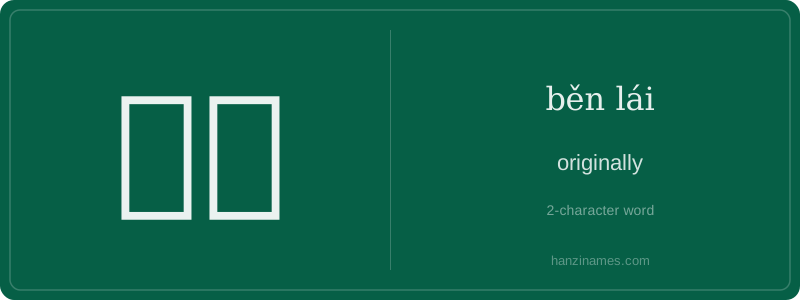
本来
本来 is an adverb meaning 'originally' or 'in reality.' It emphasizes the true or intended state of something, often contrasting with what is currently happening or perceived.
The character 本 (běn) means 'origin' or 'essence,' while 来 (lái) means 'to come' or 'to arrive.' Together, 本来 conveys the idea of 'from the beginning' or 'as it was originally.'
Originally used to describe a state of being, 本来 is commonly used in daily conversation to express expectations, past conditions, or contrasts. For example, it can be used to indicate that something was supposed to happen but didn’t, or to highlight the true nature of a situation.
Example Sentences
他本来应该今天来开会,但他生病了。
He was supposed to come to the meeting today, but he was sick.
这个计划本来可以成功的,但资金不够。
This plan could have been successful, but there wasn't enough funding.