进攻
How to Understand
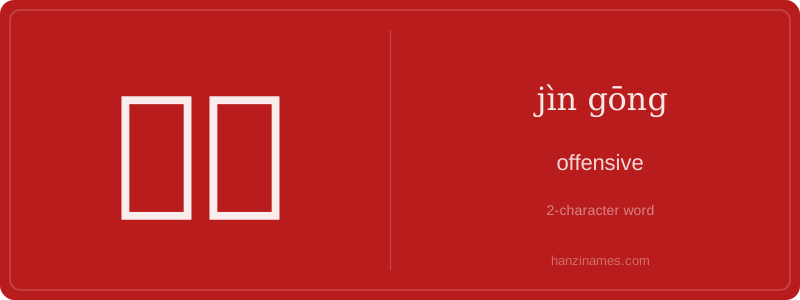
进攻 refers to an offensive action, typically in a military or competitive context. It describes the act of initiating an attack or moving forward to challenge an opponent. Unlike 'attack,' which can be more general, 进攻 often implies a strategic and organized effort.
The character 进 (jìn) means 'to move forward' or 'to advance,' while 攻 (gōng) means 'to attack' or 'to besiege.' Together, they form a compound that conveys the idea of advancing with the intent to attack, often in a planned manner.
进攻 is commonly used in military discussions, sports, and even in business strategy. In Chinese culture, it reflects the value placed on proactive and determined action. Related terms include 进攻战术 (offensive tactics) and 进攻型 (offensive type). Learners should note that it is often used in contexts requiring initiative and assertiveness.