攻
Character Story & Explanation
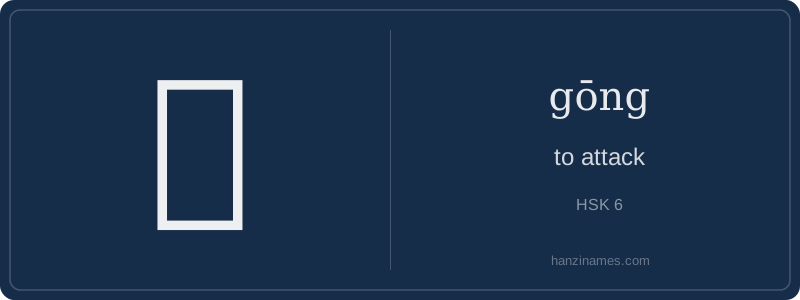
攻 appears frequently in historical military records, such as the *Zuo Zhuan*, where it describes coordinated sieges and tactical advances — always paired with planning verbs like 謀 (móu, 'to scheme') or 備 (bèi, 'to prepare'). In modern life, it’s essential in compound words like 进攻 (jìn gōng, 'offensive'), used daily in sports commentary, cybersecurity reports ('cyber attack'), and business strategy ('market offensive'). The idiom 攻无不克 (gōng wú bù kè, 'attack nothing fails to conquer') remains widely cited in leadership training and motivational contexts.
The character evolved from seal script, where it clearly combined 工 (a stylized tool or measuring device, symbolizing skill) and 攵 (a hand holding a rod, indicating purposeful action). By the Han dynasty, this structure was standardized — reflecting its conceptual core: skilled, directed action. No oracle-bone form survives, but bronze inscriptions from the Warring States period confirm its use in military command contexts.
The character 攻 (gōng) embodies a dynamic tension central to Chinese strategic thought: action with purpose, force with direction. Unlike Western notions of brute assault, 攻 in classical texts like Sun Tzu’s *The Art of War* implies calculated initiative — breaking an opponent’s will or structure through timing, deception, and psychological pressure, not just physical violence. This reflects a worldview where power is relational and victory lies in minimizing conflict while maximizing leverage.
Its radical 攵 (pū), the 'tap with a hand' or 'disciplined action' component, signals deliberate, measured intervention — not chaos or rage. Paired with 工 (gōng, 'craft, skill'), it suggests that effective attack requires craftsmanship: precision, preparation, and mastery of conditions. Thus, 攻 is never mindless aggression but a refined extension of wisdom and discipline — aligning with Confucian ideals of righteous action and Daoist principles of acting in harmony with circumstances.
In modern usage, 攻 retains this duality: it denotes military offensives, yes, but also intellectual breakthroughs ('attack a problem'), athletic strategies ('attack the net'), and even romantic pursuit ('go after someone'). This semantic elasticity reveals a cultural lens where 'attack' is not inherently negative — it becomes virtuous when aligned with integrity, competence, and just cause. To 'attack' well is to engage the world with clarity, courage, and competence — a quiet affirmation of human agency within cosmic order.
Example Sentences
Common Compounds
Similar Characters — Don't Mix These Up
Your First Step into Chinese Culture: Get a Chinese Name
Every journey into Chinese begins with a name. Use our free Chinese name generator to create a meaningful, personalized Chinese name that fits you perfectly.
Get My Chinese Name →