大陆
How to Understand
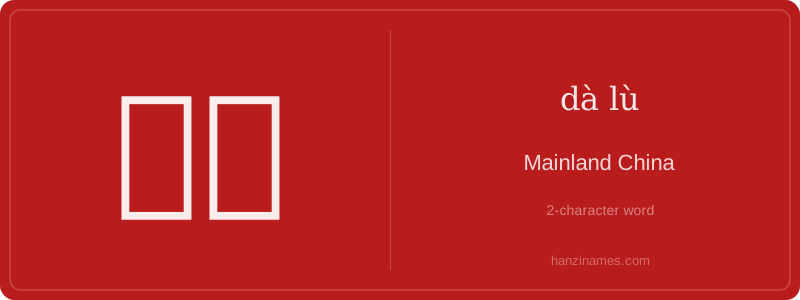
大陆 (dà lù) refers to the mainland part of China, excluding its islands and territories like Taiwan, Hong Kong, and Macau. It is often used in contrast to the term 'island' or 'overseas' in discussions about geography, politics, and culture.
The character 大 (dà) means 'big' or 'large,' while 陆 (lù) means 'land' or 'soil.' Together, they literally translate to 'big land,' emphasizing the vastness and central nature of the region within China's geographical framework.
In daily usage, 大陆 is commonly used in media, travel, and academic contexts to distinguish between the mainland and other regions. It also appears in phrases like 大陆市场 (dà lù shì chǎng), meaning 'mainland market,' and 大陆游客 (dà lù yóu kè), meaning 'mainland tourists.' Understanding this term is essential for grasping geopolitical and cultural distinctions in Chinese discourse.