不再
How to Understand
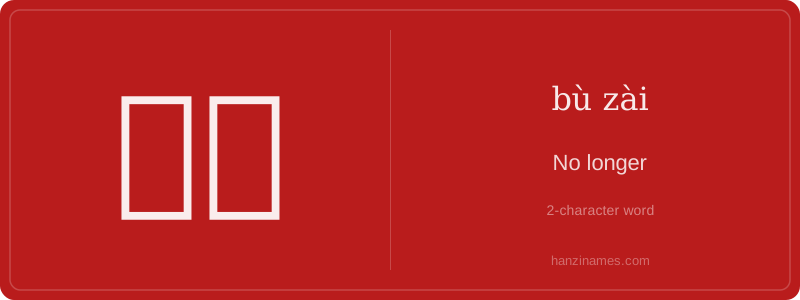
不再 (bù zài) means 'no longer' or 'not anymore.' It is used to indicate that a previous action, state, or condition has ceased to exist. Unlike similar expressions like '不再' (bù zài), which can also mean 'no longer,' it specifically conveys the idea of discontinuation.
The character 不 (bù) means 'not,' and 再 (zài) means 'again' or 'once more.' Together, they form a phrase that literally translates to 'not again,' emphasizing the end of a repeated or ongoing action or state.
不不再 is commonly used in daily conversations to express that something is no longer happening, such as stopping a habit, ending a relationship, or changing a behavior. It is often found in both formal and informal contexts and is an essential expression for conveying change in Chinese.