对方
How to Say
👀 0
How to Write
Meaning: the other party
How to Understand
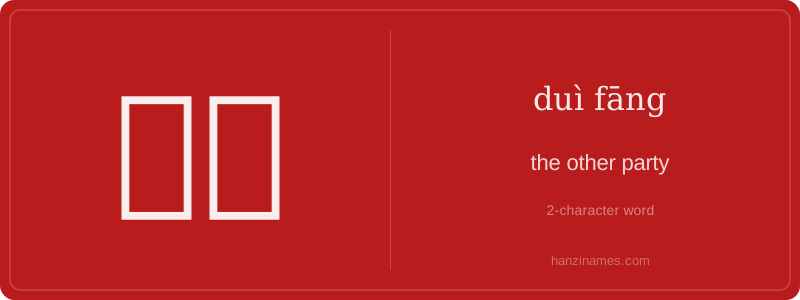
对方
对方 refers to the 'other party' in a relationship, conversation, or transaction. It is commonly used when referring to someone on the opposite side of an interaction, such as in a negotiation, argument, or discussion. Unlike 'opponent,' which can have a negative connotation, 对方 is neutral and simply indicates the person or group involved on the other side.
The character 对 (duì) means 'correct' or 'opposite,' while 方 (fāng) means 'side' or 'direction.' Together, they literally translate to 'the opposite side' or 'the other party.' This compound word reflects the idea of duality or contrast in human interactions.
在中文中,对方可用于正式或非正式场合,如商务谈判、日常对话或法律文件。它强调的是互动中的双方关系,而不是对立或敌对。例如,在讨论合同或协议时,对方可指代另一方的代表或公司。
Example Sentences
在谈判中,我们必须了解对方的需求。
In the negotiation, we must understand the other party's needs.
他总是站在对方的立场思考问题。
He always thinks from the other party's perspective.