即使
How to Understand
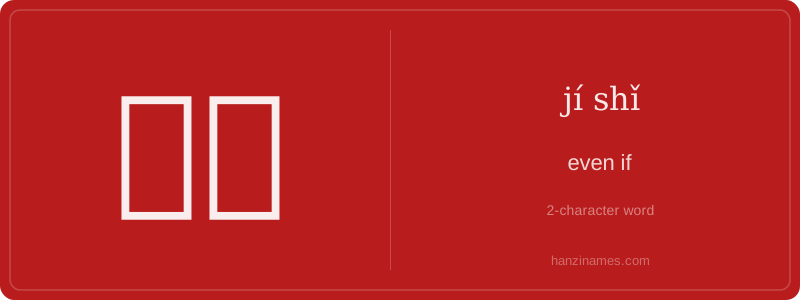
即使 is a conjunction used to introduce a condition that may seem unlikely or contrary to expectations, often translated as 'even if' or 'even though.' It sets up a hypothetical situation that does not affect the main clause, which usually expresses a result or action that still happens despite the condition.
The character 即 (jí) originally meant 'immediately' or 'at once,' while 使 (shǐ) means 'to cause' or 'to make.' Together, 即使 conveys the idea of 'even if something were to happen,' creating a conditional structure in sentences.
在中文中,即使 is commonly used in everyday speech and writing to express perseverance, determination, or acknowledgment of challenges. It is often paired with other words like 也 (yě) to emphasize the contrast, such as 在即使困难的情况下,我们也要坚持 (Even in difficult situations, we will persist).