天下
How to Understand
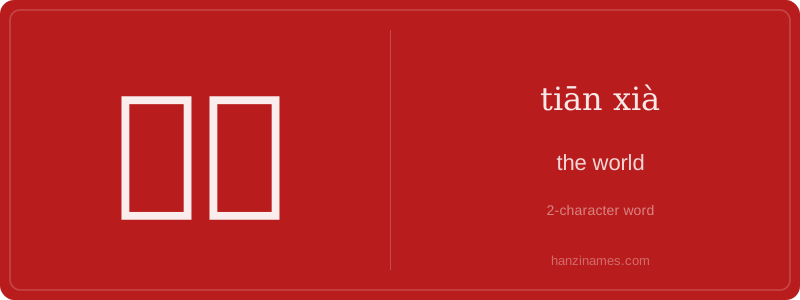
天下 (tiān xià) literally means 'heaven and earth' or 'the world.' It is often used to refer to the entire world, the universe, or the realm of human affairs. Unlike 'China,' which refers specifically to the country, 天下 has a broader, more abstract meaning, encompassing all of humanity and nature.
The character 天 (tiān) means 'heaven' or 'sky,' while 下 (xià) means 'below' or 'down.' Together, they form a poetic expression that suggests the vastness of the world, extending from the heavens to the earth. This phrase has deep roots in classical Chinese literature and philosophy.
Today, 天下 is commonly used in both formal and informal contexts, especially in expressions like 天下无敌 (tiān xià wú dí), meaning 'invincible in the world,' or 天下太平 (tiān xià tàipíng), meaning 'peace throughout the world.' Understanding its cultural depth can help learners grasp the nuances of traditional Chinese thought and modern usage alike.