刚才
How to Understand
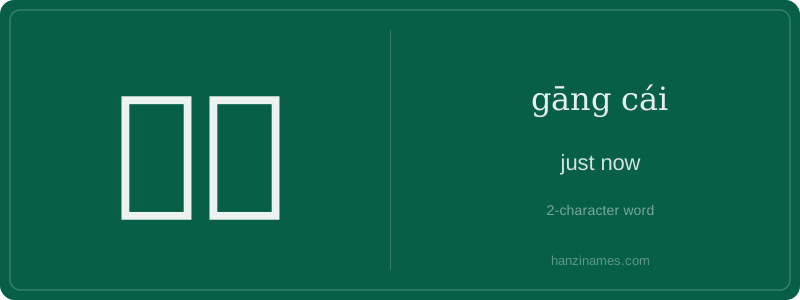
刚才 means 'just now' or 'a moment ago,' indicating a recent past time. It is used to describe actions that happened shortly before the present moment, often in conversational contexts.
The character 刚 (gāng) originally meant 'stiff' or 'rigid,' but in this compound, it conveys the idea of 'just' or 'only.' 才 (cái) is an archaic term meaning 'time' or 'moment,' contributing to the overall sense of a brief period in the recent past. Together, they form a phrase that emphasizes immediacy.
刚才 is commonly used in daily conversations to refer to something that happened very recently. It is often paired with verbs like 看 (to see), 听 (to hear), or 说 (to say). For example, “你刚才说什么?” (What did you just say?) is a typical use. It reflects the Chinese tendency to focus on temporal context in communication.