绝对
How to Understand
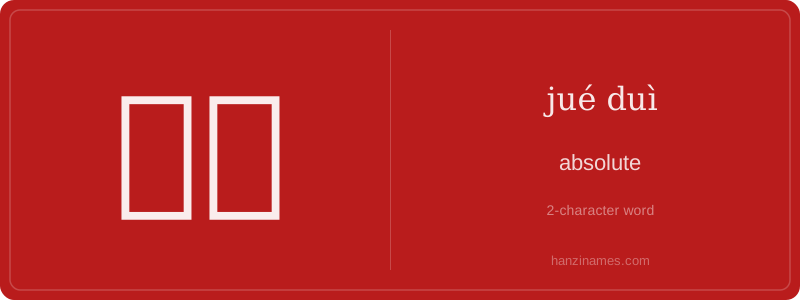
绝 对 (jué duì) is commonly translated as 'absolute' in English. It emphasizes something that is complete, unconditional, or without any exceptions. Unlike 'completely' or 'totally,' which are more about degree, 'absolute' suggests a strong, unchallengeable state or condition.
The character 绝 (jué) originally meant 'to cut off' or 'to end,' and later came to mean 'absolute' or 'complete.' 对 (duì) means 'correct,' 'opposite,' or 'match.' Together, they form a term that conveys something that is unquestionable or definitive.
In daily usage, 绝对 is often used to stress the certainty or finality of a statement. For example, it might be used in discussions about rules, facts, or decisions that cannot be altered. It's also common in formal or philosophical contexts where clarity and precision are essential.