限制
How to Understand
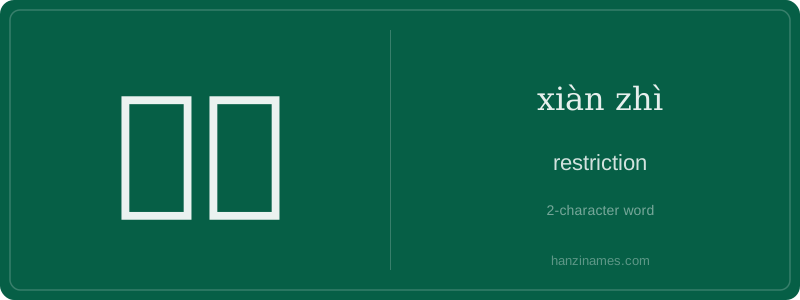
限制 means 'restriction' or 'limit,' referring to a boundary or constraint that restricts freedom, action, or extent. It often implies a rule or condition that must be followed, distinguishing it from general boundaries or natural limits.
The character 限 (xiàn) originally meant 'limit' or 'boundary,' derived from the idea of a line drawn to separate or define. 制 (zhì) means 'system' or 'control,' suggesting the enforcement or regulation of something. Together, they form a term emphasizing imposed restrictions rather than natural limitations.
限制 is commonly used in legal, social, and everyday contexts to describe rules that govern behavior, access, or usage. For example, it can refer to travel restrictions, time limits, or policy constraints. Understanding 限制 helps learners grasp how Chinese speakers discuss boundaries and regulations in various situations.