地下
How to Understand
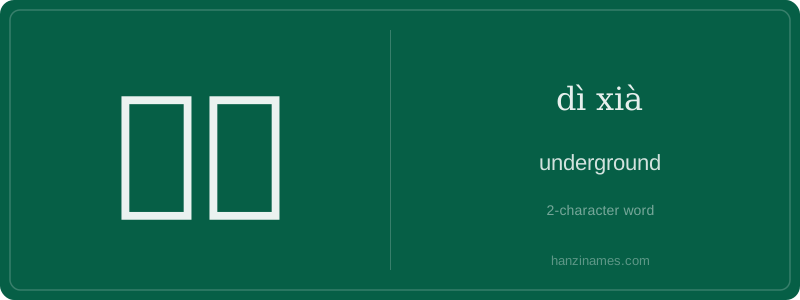
地下 refers to the area beneath the surface of the earth. It is commonly used to describe subterranean spaces, such as tunnels, basements, or underground cities. Unlike terms like 'below' or 'under,' 地下 specifically implies a space that is not visible from the surface and often has its own structure or function.
The character 地 (dì) means 'earth' or 'ground,' while 下 (xià) means 'down' or 'below.' Together, they form a compound that literally translates to 'under the earth.' This combination reflects a clear and direct etymology, emphasizing the physical location beneath the surface.
地下 is frequently used in contexts related to transportation (e.g., subway systems), architecture (e.g., underground parking), and even in metaphorical expressions (e.g., underground movements). In Chinese culture, it can also carry symbolic meanings, such as hidden or secret activities, though this is context-dependent.