不但
How to Understand
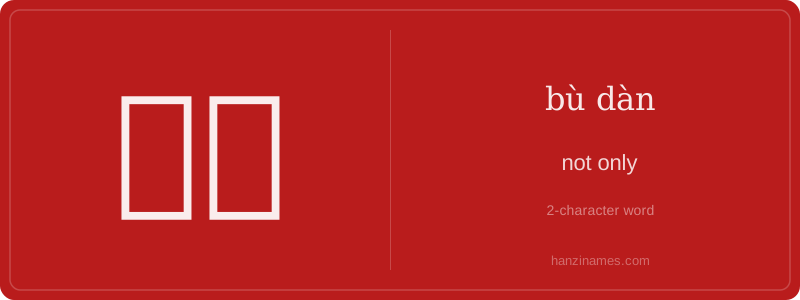
不但 is a conjunction used to introduce a statement that adds to or emphasizes a previous point, often in the context of 'not only... but also...' constructions. It highlights the additional significance or consequence of something.
The character 不 (bù) means 'not,' and 但 (dàn) means 'but' or 'however.' Together, 不但 conveys a contrastive emphasis, suggesting that more than one thing is true or happening. This structure is commonly used in both spoken and written Chinese to add depth to statements.
In daily use, 不但 is often paired with 而且 (érqiě), meaning 'and also,' to form the phrase 不但...而且..., which translates to 'not only... but also.' This construction is essential for expressing complex ideas and adding nuance to conversations, especially in academic, professional, and formal contexts.