游行
How to Understand
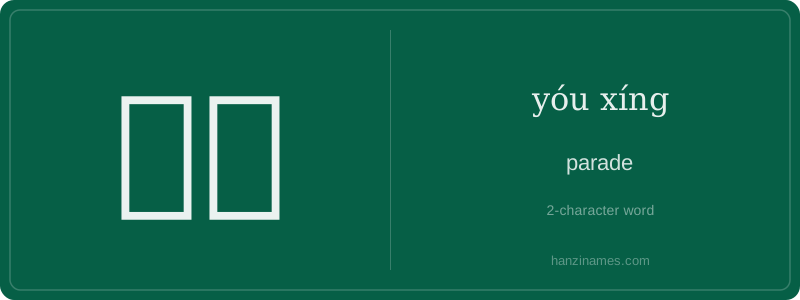
游行 refers to a public procession or march, typically organized to express a shared opinion, celebrate an event, or protest a policy. It is often associated with political or social movements and can be peaceful or more assertive in nature.
The character 游 (yóu) originally meant 'to swim' or 'to move freely,' while 行 (xíng) means 'to walk' or 'to act.' Together, they suggest a movement or journey, which aligns with the idea of a group moving together in a coordinated way, such as in a parade.
游行 is commonly used in news reports and political contexts. In China, it is often associated with state-organized events, but it can also refer to unauthorized gatherings. Learners should be aware of the sensitive nature of this term in certain discussions.