南方
How to Understand
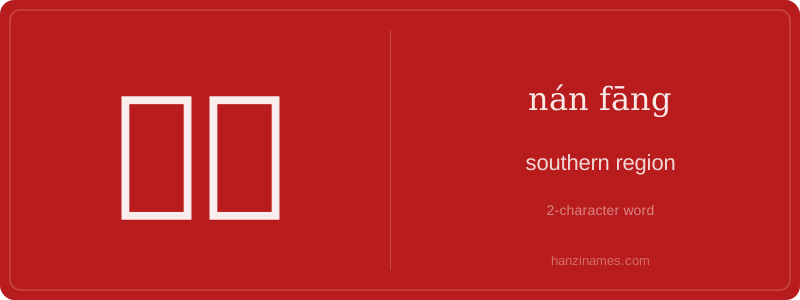
南方 (nán fāng) refers to the southern part of a region, typically used in the context of China. It is often contrasted with 北方 (běi fāng), meaning 'northern region.' Unlike general terms like 'south,' 南方 can carry cultural and geographical connotations specific to Chinese contexts.
The character 南 (nán) originally meant 'south' or 'southern direction,' derived from ancient directional symbols. 方 (fāng) means 'region,' 'direction,' or 'way.' Together, they form a term that describes a geographic area located in the south.
南方 is commonly used in everyday speech to describe climate, culture, or regional differences. For example, people might refer to the warmer weather in the southern regions or the distinct dialects spoken in southern China. It also appears in expressions like 南方人 (nánfāng rén), meaning 'southerners,' and 南方文化 (nánfāng wénhuà), meaning 'southern culture.'