上午
How to Understand
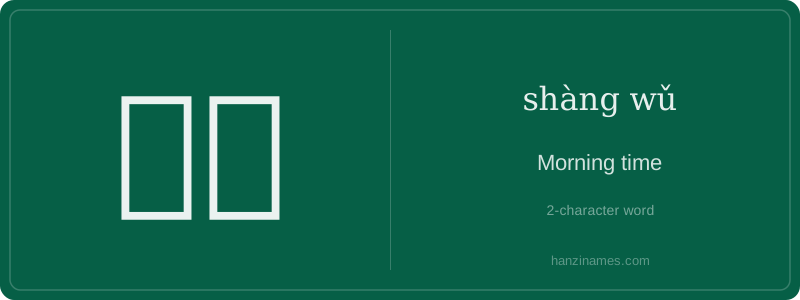
上午 refers to the morning period of the day, typically from sunrise until noon. It is commonly used in both formal and informal contexts to denote the early part of the day.
The character 上 (shàng) means 'above' or 'up,' and 午 (wǔ) refers to the 'noon' or the fifth Chinese hour. Together, 上午 literally translates to 'above noon,' indicating the time before noon. This reflects the traditional Chinese system of dividing the day into twelve two-hour periods, with 午 marking the middle of the day.
上午 is widely used in daily conversations, schedules, and calendars. In China, it's common to refer to activities happening in the morning using this term. It is also often paired with 下午 (xiàwǔ), meaning 'afternoon,' to distinguish between the two halves of the day. Understanding 上午 helps learners grasp time expressions and improve their ability to communicate effectively in Chinese contexts.