再说
How to Say
👀 0
How to Write
Meaning: Furthermore
How to Understand
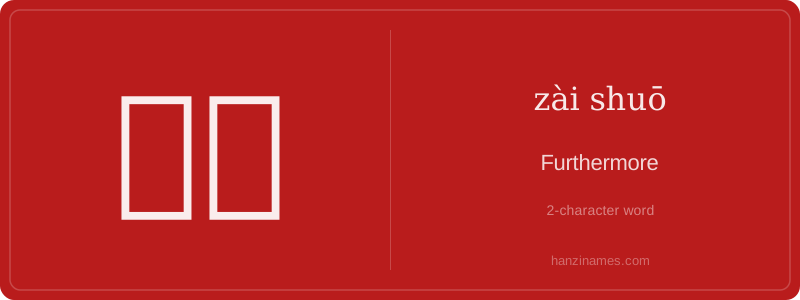
再说
再说 (zài shuō) is an adverb meaning 'furthermore' or 'in addition.' It is used to introduce another point or argument, often in a persuasive or explanatory context. Unlike 'but' or 'however,' which contrast ideas, 再说 adds to the discussion.
The character 再 (zài) means 'again' or 'once more,' while 说 (shuō) means 'to speak' or 'to say.' Together, they imply 'saying again' or 'furthermore,' suggesting a continuation of thought.
再说 is commonly used in spoken and written Chinese to transition between ideas, especially in debates, discussions, or explanations. It helps maintain logical flow and emphasizes additional points. It can also be used humorously or sarcastically, depending on tone and context.
Example Sentences
再说一次,这个计划很有希望。
Once again, this plan is very promising.
再说,你已经答应了。
Furthermore, you have already agreed.