后者
How to Say
👀 0
How to Write
Meaning: the latter
How to Understand
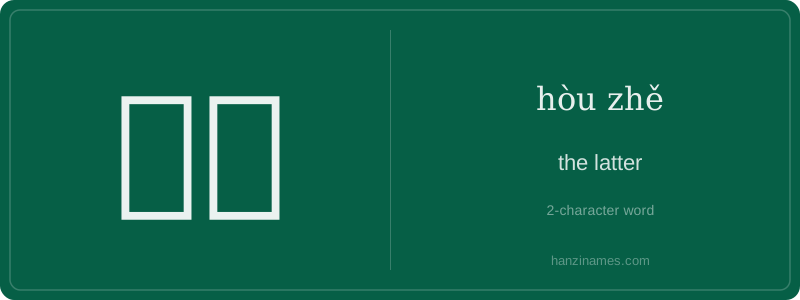
后者
后者 refers to the second of two previously mentioned items, people, or ideas. It is commonly used in contrast to 前者 (the former), emphasizing the second option in a comparison.
The character 后 (hòu) means 'after' or 'later,' while 者 (zhě) is a classifier often used to denote a person or thing in a general sense. Together, 后者 literally means 'the one that comes after,' indicating the second of two options.
In daily conversation, 后者 is frequently used when comparing two choices, such as in academic, business, or casual settings. It helps clarify which item is being referred to when two things are discussed. This word is essential for clear communication in Chinese, especially in contexts requiring comparison or contrast.
Example Sentences
他更喜欢后者,因为它更简单。
He prefers the latter because it is simpler.
在两个选项中,后者更有利。
In the two options, the latter is more advantageous.