只得
How to Understand
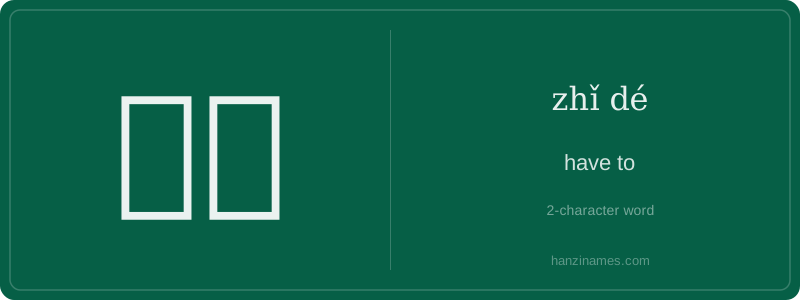
只得 is an adverb meaning 'have to' or 'must,' indicating a necessity or lack of choice. It often conveys a sense of reluctance or inevitability, suggesting that the action is performed out of necessity rather than preference.
The character 只 (zhǐ) means 'only' or 'just,' and 得 (dé) is a modal particle used to indicate ability or possibility. Together, 只得 emphasizes that something is done out of necessity, with no other options available.
It is commonly used in daily conversation to express obligations or unavoidable situations. For example, it might be used when someone has to do something they don't want to do, or when there's no alternative but to take a certain action. It reflects a cultural tendency to acknowledge duty and constraint in social interactions.