之际
How to Understand
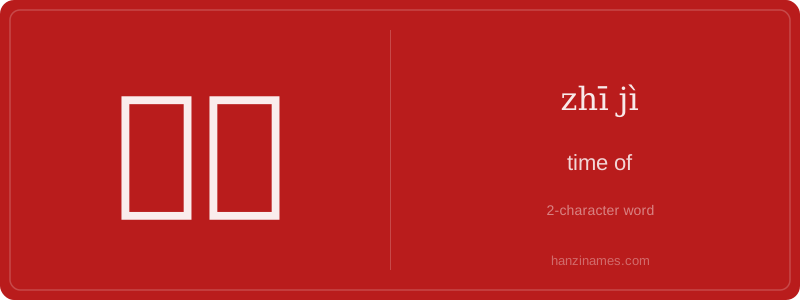
之际 is a Chinese term that translates to 'time of' or 'moment of' in English. It is used to denote a specific point in time when an event occurs, often emphasizing the significance or transition of that moment.
The character 之 (zhī) is a possessive particle commonly used to indicate a relationship between two nouns, while 际 (jì) means 'boundary,' 'point,' or 'time.' Together, 之际 refers to a particular moment or juncture, often carrying a sense of importance or change.
It is frequently used in formal and literary contexts, such as in news reports, historical texts, and official documents. For example, it can describe the time of a major event, like the start of a new era or a significant political change. In daily conversation, it may be less common but still appears in expressions related to celebrations, transitions, or important milestones.