不许
How to Understand
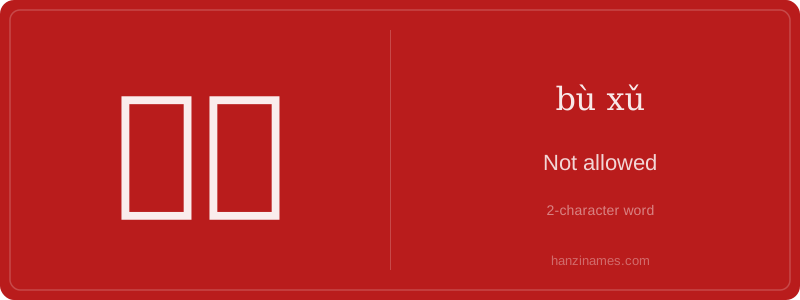
不许 means 'not allowed' or 'must not' in English. It is used to prohibit an action, often with a sense of authority or strong disapproval. Unlike 'can't,' which can be more neutral, 不许 carries a stronger tone of prohibition.
The character 不 (bù) means 'not,' and 许 (xǔ) means 'to allow' or 'to permit.' Together, they form a negative imperative, literally meaning 'not allowed.' This structure is common in Chinese for expressing prohibitions or restrictions.
不许 is frequently used in daily life, such as in schools, workplaces, or homes, to tell someone not to do something. It is also used in formal contexts like rules and regulations. The phrase is often accompanied by a tone of urgency or seriousness, making it an essential expression for understanding Chinese social norms and communication styles.