最低
How to Understand
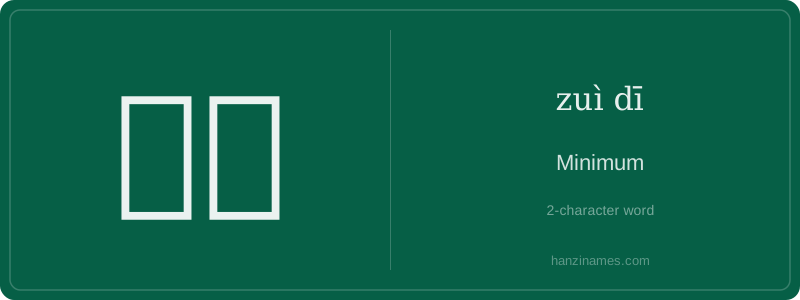
最低 (zuì dī) means 'minimum' or 'lowest' in English. It is used to describe the smallest possible amount, level, or value in a given context. Unlike 'least,' which can function as an adverb or adjective, 最低 is primarily an adjective and emphasizes the extreme end of a scale.
The character 最 (zuì) means 'most' or 'maximum,' while 低 (dī) means 'low' or 'below.' Together, they form a compound that literally translates to 'most low,' emphasizing the lowest point or value. This structure is common in Chinese for expressing extremes.
最低 is commonly used in financial, academic, and everyday contexts. For example, it might refer to the lowest price, the lowest temperature, or the lowest score. In cultural terms, it reflects the importance of precision and clarity in Chinese communication, especially when discussing limits or boundaries.