生气
How to Understand
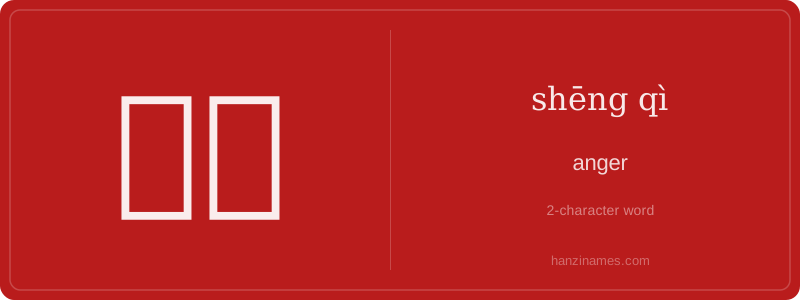
生气 (shēng qì) primarily means 'anger' or 'resentment' in English. It refers to a strong feeling of irritation or frustration, often triggered by something someone says or does.
The character 生 (shēng) originally meant 'to be born' or 'to arise,' and later came to mean 'to produce' or 'to cause.' 气 (qì) means 'energy,' 'spirit,' or 'air.' Together, 生气 suggests the 'arising of energy' or 'emotional force,' which is why it's used to describe anger or indignation.
In daily use, 生气 is commonly used to describe feelings of being upset or annoyed. It can also be used metaphorically, such as in phrases like 那个地方很有生气 (that place has a lively atmosphere). Understanding 生气 helps learners grasp emotional expressions in Chinese culture and improve their ability to communicate feelings effectively.