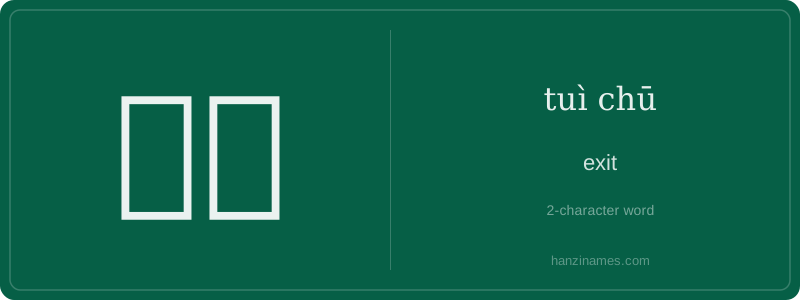
退出
How to Say
👀 0
How to Write
Meaning: exit
How to Understand
退出
退出 means 'to exit' or 'exit' in English. It refers to the action of leaving a place, system, or situation, or the state of being outside of something.
The character 退 (tuì) originally meant 'to retreat' or 'to move back,' while 出 (chū) means 'to go out' or 'to emerge.' Together, they convey the idea of moving outward or leaving a space, making 退出 a versatile term for both physical and abstract exits.
退出 is commonly used in daily life, such as exiting a building, logging out of a website, or leaving a group. In Chinese culture, it can also imply a strategic withdrawal in certain contexts, like business or politics.
Example Sentences
他决定退出比赛。
He decided to exit the competition.
请在离开前退出系统。
Please exit the system before leaving.