节目
How to Understand
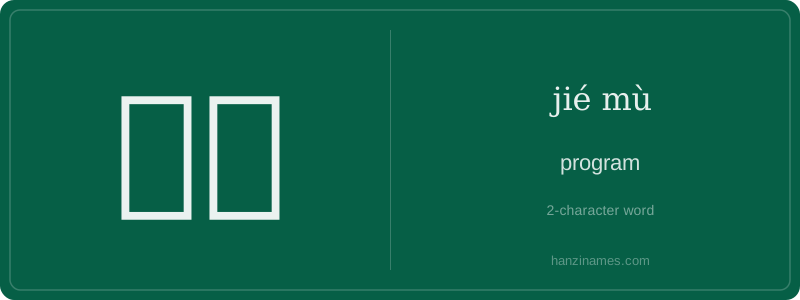
节目 (jié mù) is a noun meaning 'program' or 'show,' typically referring to a planned sequence of activities, especially on television or radio. It can also refer to an event or occasion, often with a formal or structured nature.
The character 节 (jié) originally meant 'node' or 'junction,' and later came to mean 'section' or 'part.' 目 (mù) means 'eye' or 'item.' Together, they form a term that implies a structured or planned sequence of content, like a TV program or a performance.
节目 is commonly used in contexts such as television, radio, or events. It is a versatile term that can refer to both entertainment programs and formal occasions. In daily conversation, it is often used when talking about TV shows, radio programs, or scheduled activities.