前者
How to Understand
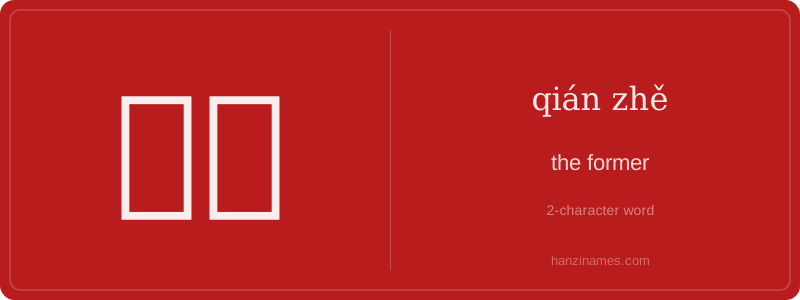
前者的 literal meaning is 'the former,' used to refer to the first of two previously mentioned things. It emphasizes contrast between two options or entities, often in a list or comparison.
The character 前 (qián) means 'front' or 'previous,' while 者 (zhě) is a classifier for people or things, often used to form nouns. Together, 前者 literally means 'the one that comes before,' making it ideal for distinguishing between two items in a sequence or comparison.
前者的 usage is common in academic, formal, and conversational contexts where clarity is needed between two alternatives. It's frequently used in debates, comparisons, and when discussing choices. In Chinese culture, clarity in communication is highly valued, making 前者 an essential word for precise expression.