广播
How to Understand
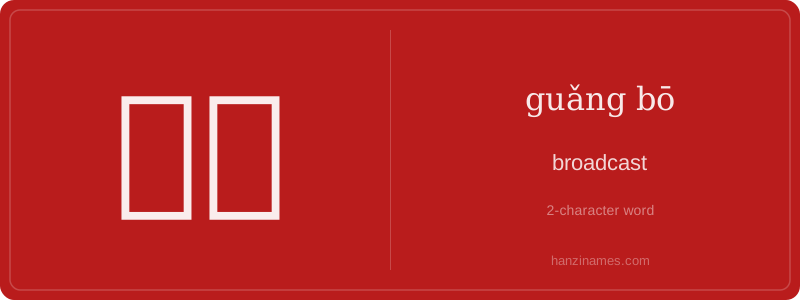
广播 (guǎng bō) refers to a radio or television broadcast, typically involving the transmission of news, music, or other content to a wide audience. It is often associated with public media and can also mean 'to broadcast' in a more general sense.
The character 广 (guǎng) originally meant 'wide' or 'broad,' and later came to signify something that reaches a large number of people. 播 (bō) means 'to spread' or 'to broadcast.' Together, they convey the idea of spreading information widely, like a public message or program.
广播 is commonly used in both formal and informal contexts, such as in media, education, and daily communication. In China, it is an important tool for disseminating information and entertainment. It is also used in phrases like 广播电台 (broadcast station) and 广播节目 (broadcast program). Understanding this term helps learners grasp how media operates in Chinese-speaking environments.